In March 2026, the U.S. Food and Drug Administration (FDA) finalized a rule that will standardize all FDA-assigned National Drug Codes (NDC) into a single 12-digit format. While the change will not take effect until March 2033, the impact stretches far beyond updating a number in a database.
From product labels and packaging artwork to barcodes, ERP (Enterprise Resource Planning) systems, regulatory data, and partner networks, the transition will affect every stage of pharmaceutical labeling operations. For teams managing thousands of products, preparing early will be critical to reducing risk, maintaining compliance, and avoiding costly remediation efforts later.
Most importantly, the NDC transition presents an opportunity: to modernize labeling, strengthen master data governance and lay the foundation for future digital labeling and traceability initiatives.
Today, FDA-assigned NDCs are typically issued as 10-digit codes that appear in multiple formats. Under the new rule, all FDA-assigned NDCs will use a standardized 12-digit structure: 6-digit labeler code – 4-digit product code – 2-digit package code.
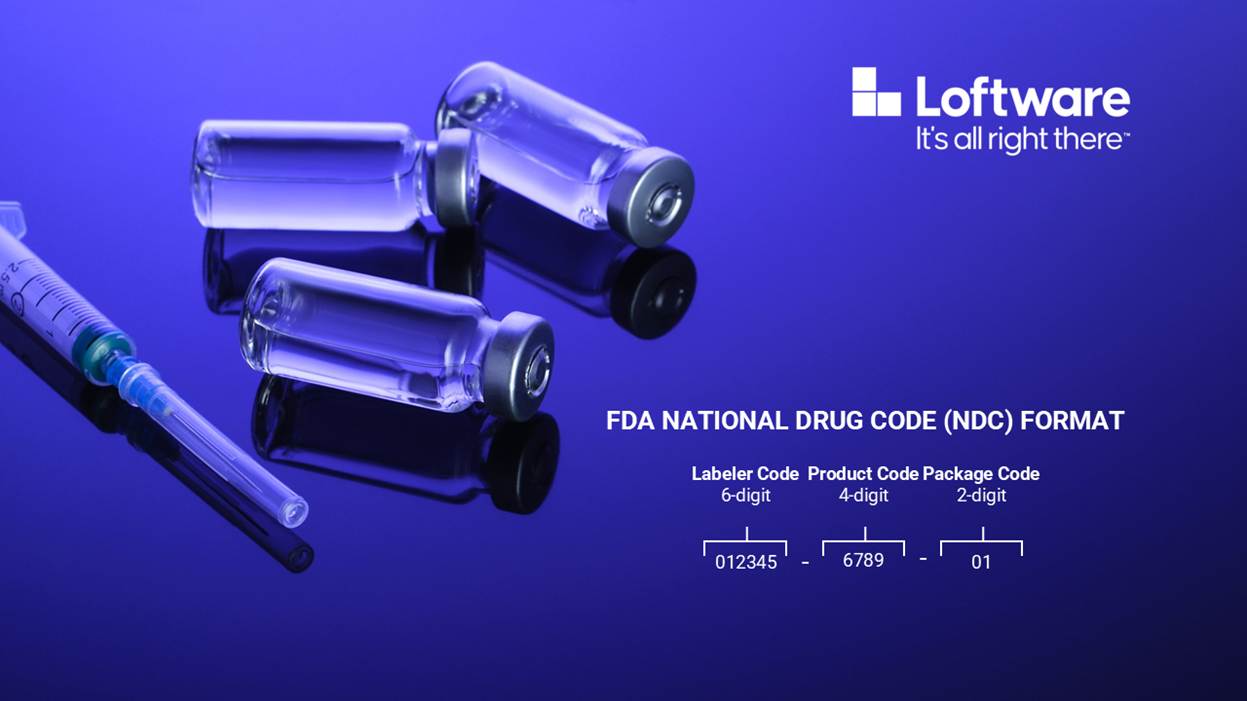
To support this format, existing NDCs will be converted using leading zeros where required. While the change may appear straightforward on paper, NDCs are embedded across a wide range of systems, processes, and customer-facing materials throughout the pharmaceutical supply chain.
|
Date |
What happens |
|
March 2026 - March 2033 |
Preparation period. FDA continues assigning 10-digit NDCs while manufacturers prepare systems, data, and labeling processes |
|
March 7, 2033 |
FDA begins assigning only 12-digit NDCs and converts existing FDA-assigned NDCs |
|
March 2033 - March 2036 |
Three-year transition period for product labeling |
|
After March 7, 2036 |
Products displaying only legacy 10-digit NDC labeling may face regulatory action |
The FDA 12-digit NDC update is not simply a regulatory data exercise. It affects the entire lifecycle of pharmaceutical labeling. Every product label containing an NDC will require review and, in many cases, revision. This includes:
· Primary labels
· Secondary packaging
· Cartons
· Instructions for Use (IFUs)
· Package inserts
· Regulatory artwork libraries
· Label templates
For organizations managing extensive product portfolios, the workload could involve thousands of SKUs across multiple markets and packaging configurations.
The rule also introduces changes to barcode expectations. Traditional UPC-based approaches may not fully support future requirements, while GS1 standards and 2D barcodes are increasingly positioned to support the next generation of pharmaceutical identification and traceability.
As a result, many organizations can use the NDC transition as a catalyst to accelerate:
· GS1 DataMatrix adoption
· Serialization and aggregation initiatives
· Packaging line upgrades
· Vision system modernization
· Supply chain traceability programs
Rather than managing multiple disconnected compliance initiatives, organizations have an opportunity to align NDC remediation with their broader digital transformation initiatives.
Maintaining accurate NDC information will require close coordination between multiple stakeholders, including Regulatory Affairs, Packaging Engineering, Supply Chain, IT, data governance teams, and external manufacturing partners.
The challenge is ensuring that the NDC appearing on packaging artwork matches the information held in regulatory submissions, product master data systems, and manufacturing execution environments.
Without a connected approach, inconsistencies will create compliance risk, introduce operational inefficiencies, delay product releases, and increase the likelihood of regulatory actions.
While the 2033 deadline may feel distant, forward-looking pharmaceutical leaders are already assessing this change as part of a larger digital transformation journey.
Many companies still manage labeling data across disconnected repositories, artwork systems, and ERP environments. The NDC transition highlights the growing need for:
· Centralized label content management
· Structured labeling data
· Stronger master data governance
· Automated artwork update processes
· More agile regulatory change management
These capabilities are becoming increasingly important as organizations pursue digital labeling, product traceability, and global supply chain visibility strategies.
The transition to a 12-digit NDC format is not a one-time event. It is a multi-year program that requires preparation, execution, and ongoing governance.
1) Today: build visibility and prepare
Over the next few years, manufacturers need to understand where NDC data.
Loftware’s solution and experienced team help:
· Identify labels, artwork and packaging assets affected by regulatory changes
· Centralize labeling content and data management
· Improve governance across global labeling operations
· Create standardized label templates and approval processes
· Reduce reliance on disconnected spreadsheets and manual updates
By establishing a stronger foundation now, organizations can minimize disruption as the FDA timeline progresses.
2) During the transition: manage change at scale
During the 7 year transition, manufacturers will need to update packaging and labeling efficiently without slowing production.
Loftware's enterprise labeling and artwork management solutions help:
· Manage large-scale label and artwork updates
· Maintain consistency across products, markets, and facilities
· Connect labeling processes with ERP, PLM, and business systems
· Ensure controlled workflows and regulatory oversight
· Reduce manual intervention through automation
This becomes especially valuable when thousands of products must be reviewed, updated, and validated within defined compliance windows.
3) Beyond 2033: enable future-ready labeling
The NDC transition is only one component of a broader regulatory and supply chain evolution. Many pharmaceutical manufacturers are simultaneously investing in:
· Drug Supply Chain Security Act (DSCSA) compliance program
· Serialization initiatives
· 2D barcode adoption
· SAP transformation projects
· Digital labeling strategies
· Supply chain traceability and visibility programs
Loftware enables life sciences companies to bring these initiatives together through a connected labeling ecosystem that links business systems, product data, and packaging operations.
Instead of treating NDC compliance as an isolated project, manufacturers can use it as a stepping stone toward a more agile, compliant, and resilient supply chain.
March 2033 may still be years away, but the preparation required for a successful transition is substantial. This regulatory change represents one of the most significant labeling shifts on the horizon, touching artwork, packaging, master data, barcodes, and manufacturing operations alike.
The organizations that begin planning early will be best positioned not only to meet compliance requirements, but also to use the transition as an opportunity to modernize labeling operations, improve data quality, and strengthen their supply chain performance.
With the right strategy, the NDC transition can become more than a regulatory obligation. It can serve as a catalyst for digital transformation.
Discover more about how Loftware is modernizing complex pharmaceutical labeling to bring medicines to market faster and more sustainably. Learn more: http://loftware.com/industries/pharmaceutical